
Japan’s stunning natural landscapes have become an international visual benchmark. Its territory is distinguished by its unique landscapes, formed by the interaction of diverse natural processes. The archipelago’s location in a region of high seismic activity, within the Pacific Ring of Fire, influences its geological evolution and fosters the existence of volcanoes, tectonic phenomena, hot springs, and other features resulting from this natural dynamic. Similarly, its predominantly mountainous terrain contributes to the formation of diverse natural environments of remarkable scenic value.
Noboribetsu Hell Valley, Hokkaido
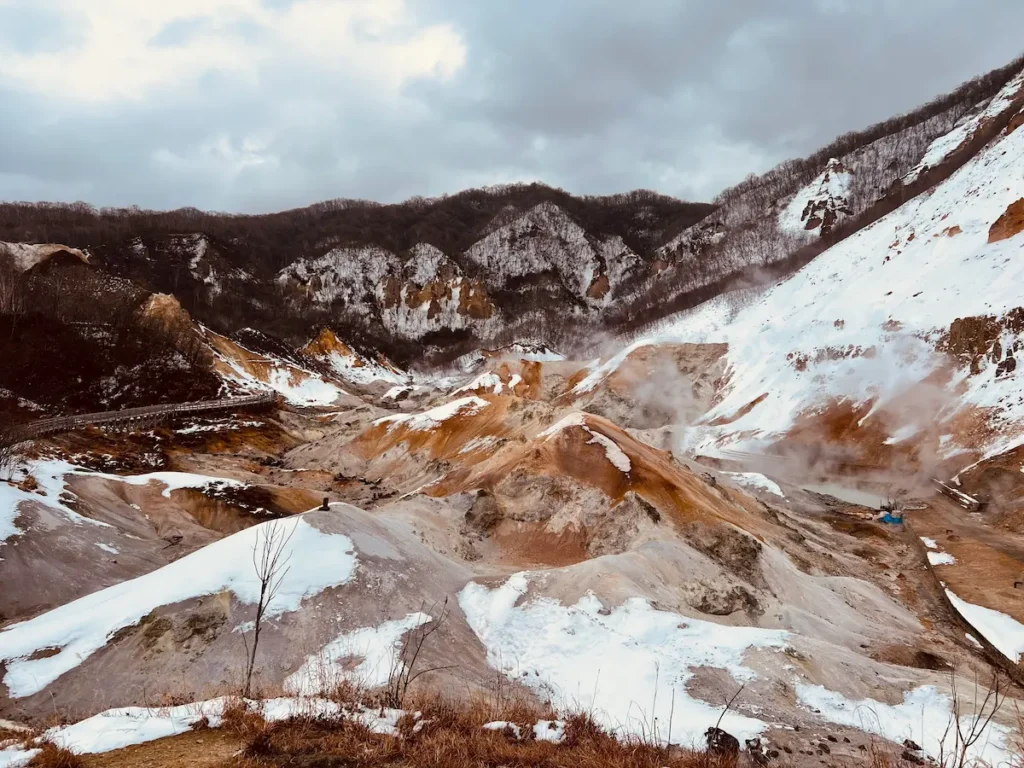
The landscape of Jigokudani, known as Noboribetsu’s Hell Valley, is one of the most spectacular examples of Japan’s intense volcanic activity. Located near the hot spring town of Noboribetsu in Hokkaido, this valley was formed in the crater of an ancient eruption and is now filled with fumaroles, boiling mud pools and streams of sulphurous water. The steam that constantly rises from the ground and the strong smell of sulphur create an almost supernatural landscape that reflects the powerful geothermal activity beneath the surface.
Naruto Whirlpools, Tokushima
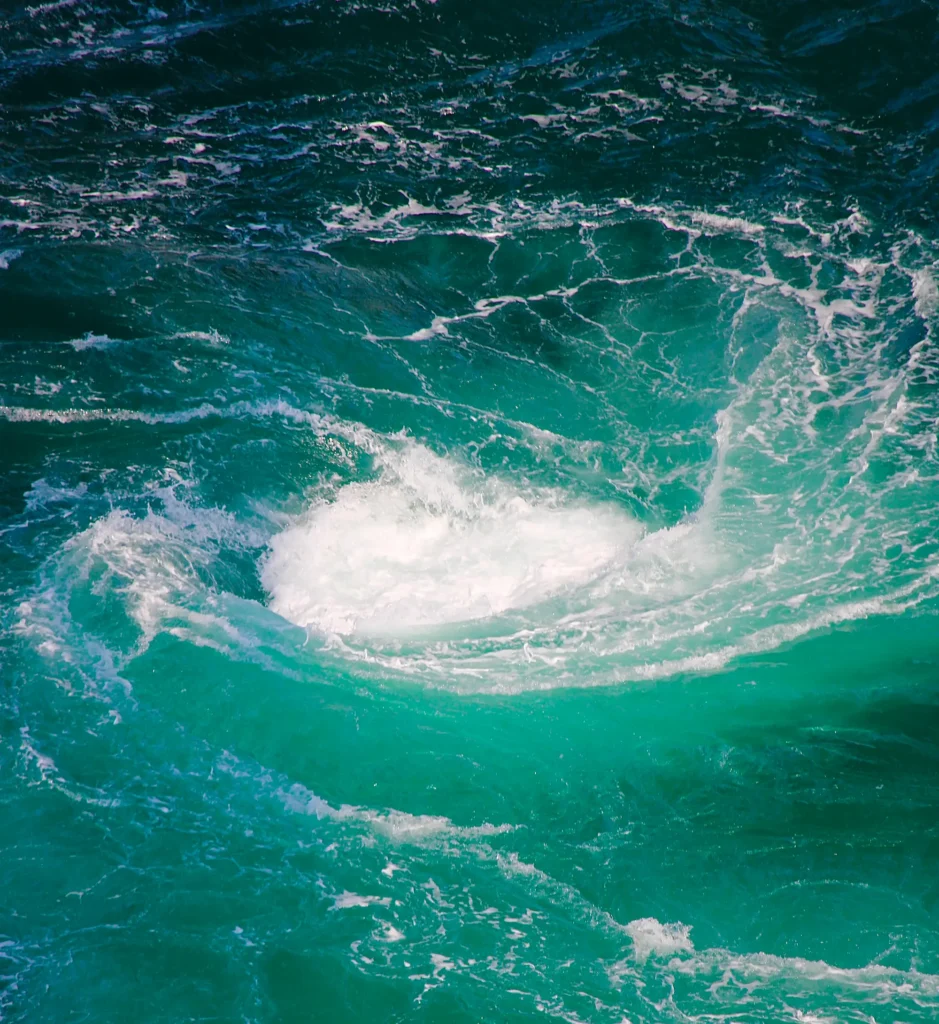
One of Japan’s most curious marine phenomena occurs in the Naruto Strait. These enormous circular currents are formed by the strong tidal flow between the Seto Inland Sea and the Pacific Ocean, which generates powerful whirlpools as it passes through the narrow channel. The phenomenon is especially visible during tidal changes, when the speed of the current can create whirlpools several metres in diameter.
Tottori Sand Dunes, Tottori
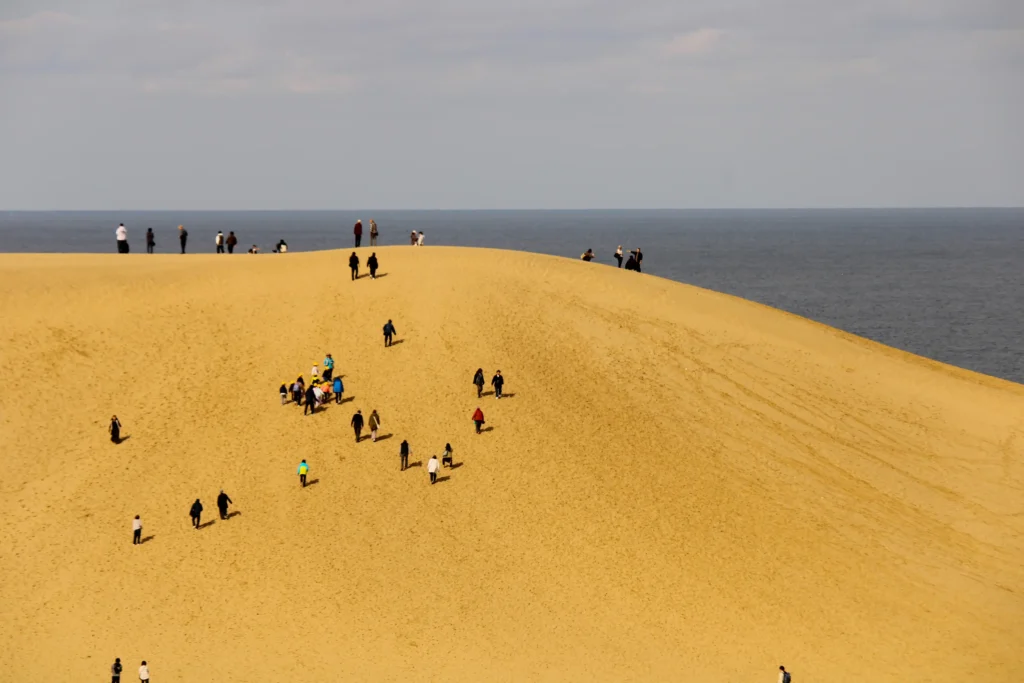
These sandy formations constitute Japan’s largest dune landscape and are a striking sight in a country generally associated with mountains and forests. Located next to the Sea of Japan, these dunes were formed over thousands of years by the accumulation of sediment carried by the Sendai River and subsequently shaped by wind and sea currents. The result is an extensive sandy landscape with ridges and slopes that constantly change shape due to the action of the wind.
Sakurajima volcano, Kagoshima

Sakurajima dominates the landscape of Kagoshima Bay, and what is surprising is not that it is an active volcano (there are currently more than 100 active volcanoes in Japan), but that it is only 4 kilometres from Kagoshima, a city of 600,000 inhabitants. It used to be an island, but after the great eruption of 1914, lava ended up connecting it to the Ōsumi Peninsula.
Amanohashidate, Kioto
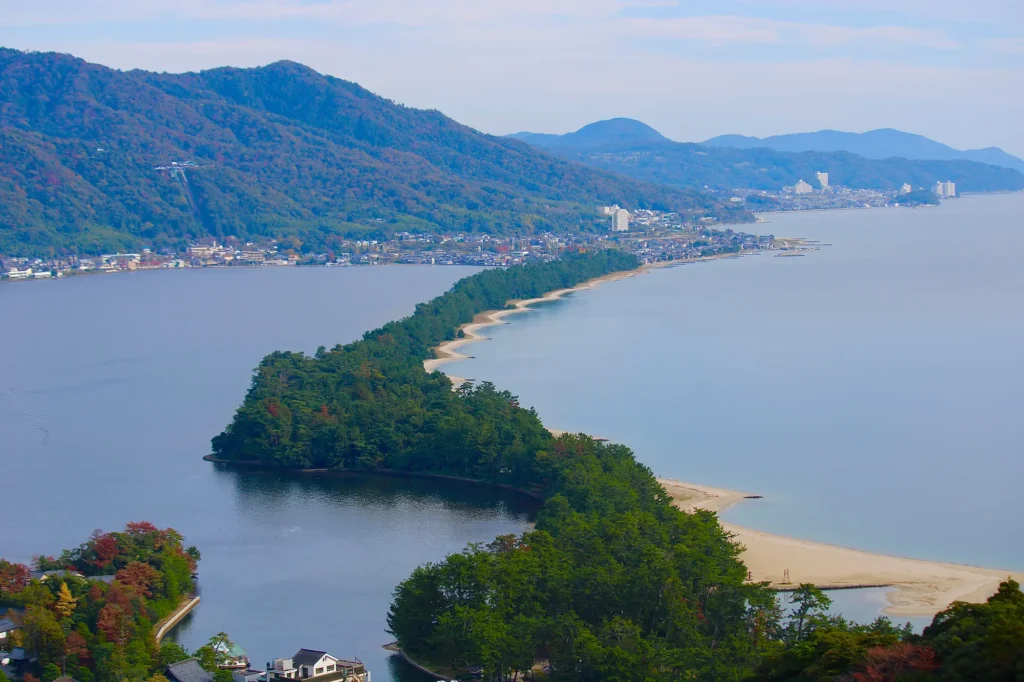
Amanohashidate is one of Japan’s most famous natural landscapes and is considered one of the country’s ‘three great landscapes’. It is a narrow strip of sand covered with pine trees that crosses Miyazu Bay, forming a kind of natural bridge between both sides of the coast. This formation was created over thousands of years by the accumulation of sediment carried by sea currents, giving rise to a unique landscape.
Iya Valley, Tokushima
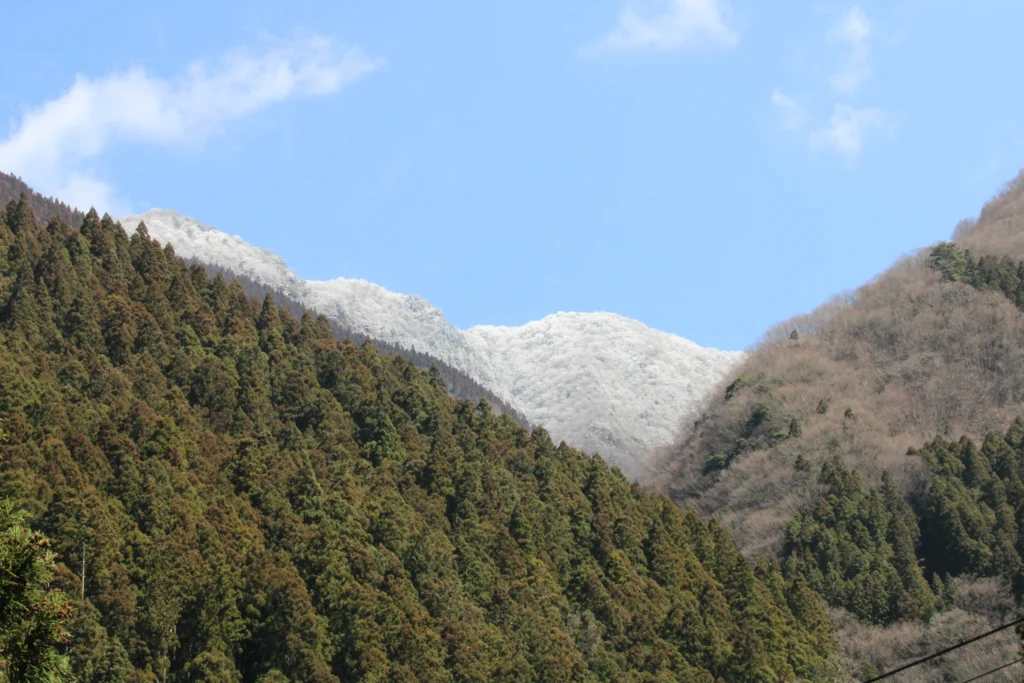
The Iya Valley is a remote and spectacular landscape formed by the erosion of rivers flowing through the mountains of Shikoku. Its deep canyons and steep slopes were created thousands of years ago by a combination of tectonic activity and river erosion. The region preserves traditional suspension bridges and dense forests, which, together with its geographical isolation, create a unique setting.
Yakushima, Kagoshima
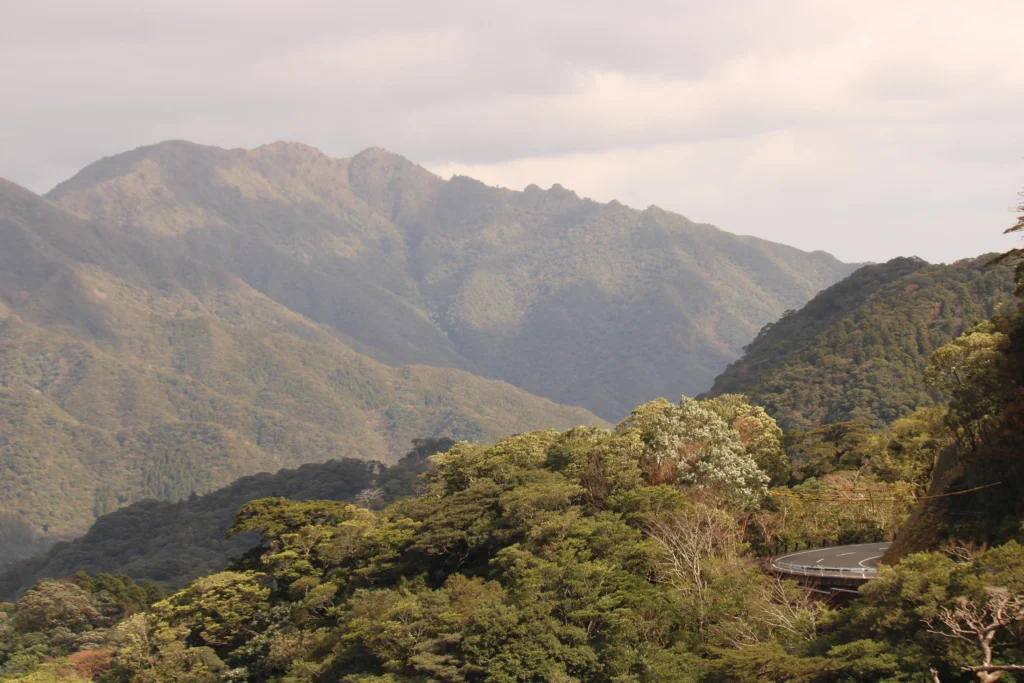
Yakushima Island is considered a veritable natural laboratory of geography and ecology, as the entire island is a unique geological and climatic phenomenon. Its mountainous terrain, combined with abundant rainfall—it is one of the rainiest areas in Japan—has fostered the development of ancient primary forests with exceptional biodiversity. These factors have allowed the conservation of temperate and subtropical ecosystems in a relatively small area, making Yakushima a unique place within the Japanese archipelago.
Iriomote Mangroves, Okinawa
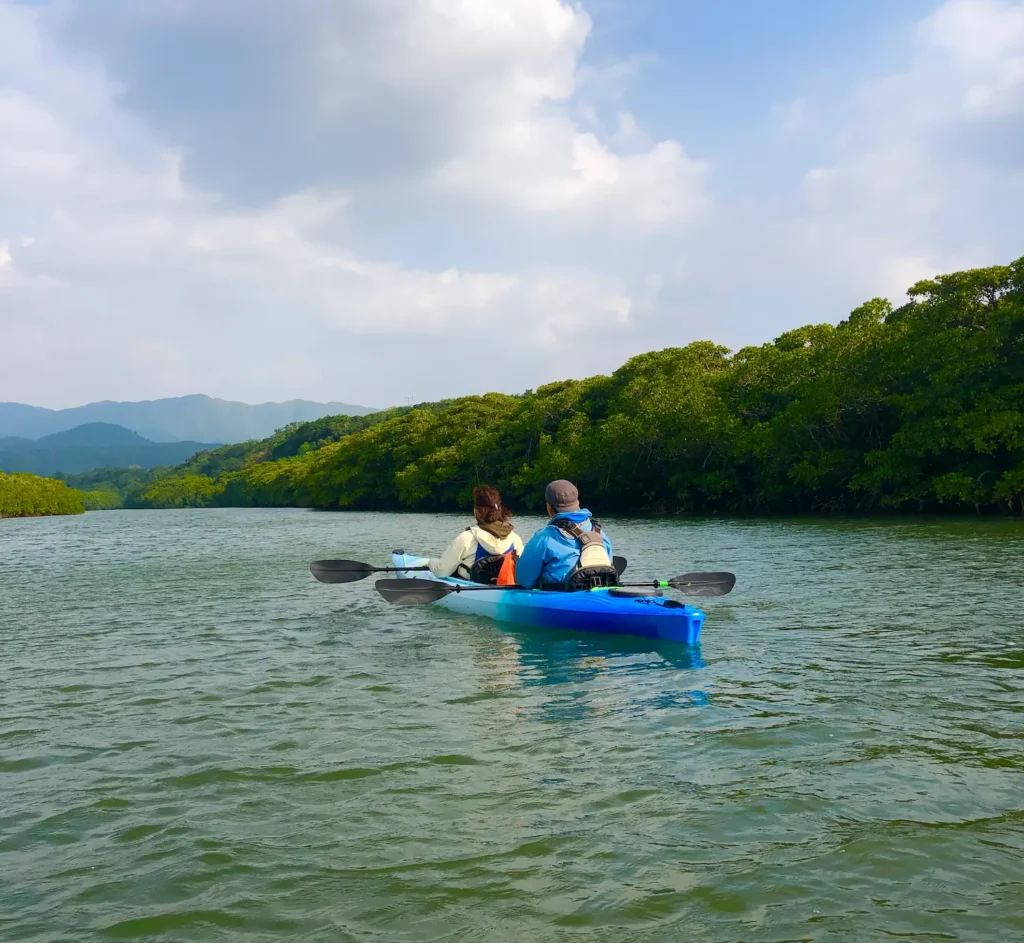
The mangroves of Iriomote-Ishigaki National Park are located on Iriomote Island, within one of Japan’s most tropical natural areas. This park protects an estuary ecosystem where rivers meet the sea, allowing the development of extensive mangroves adapted to the tides and subtropical climate. The combination of warm temperatures, coastal sedimentation and marine dynamics has resulted in a landscape that is very different from the mountainous regions of the rest of the Japanese archipelago.