
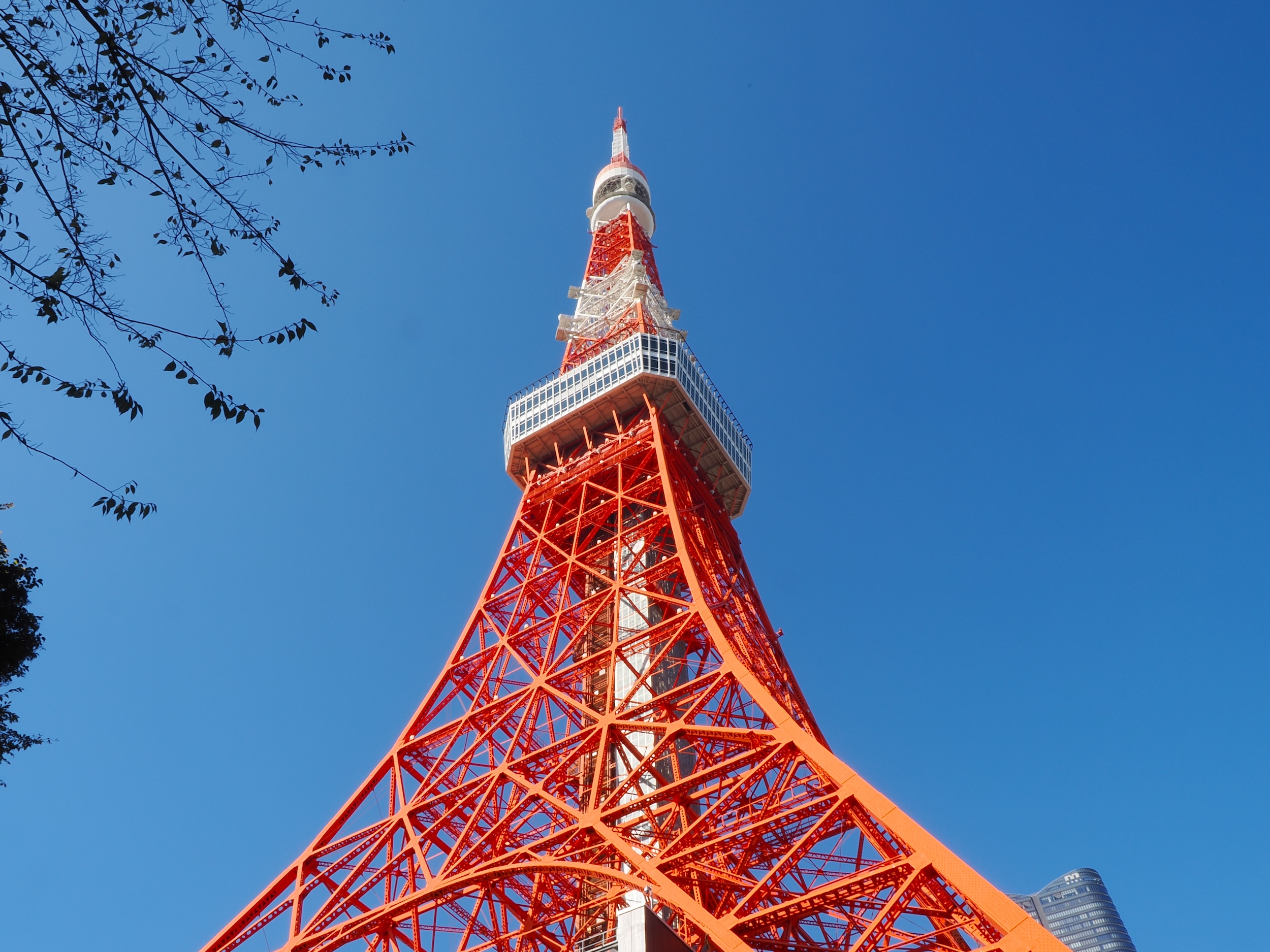
Located in the Minato district, Tokyo Tower (東京タワー, Tōkyō Tawā) stands as one of the most recognizable landmarks of the Japanese capital’s skyline. It is a top destination for travelers in Japan and even boasts its own emoji: 🗼.
This lattice structure—inspired by the Eiffel Tower but adapted with its own functional aesthetic—has been the emblem of modern Japan for decades. Its international orange and white color scheme is not only a response to aviation safety regulations but also provides a visual warmth that stands out among the surrounding glass and steel skyscrapers.
The tower’s construction was completed in 1958, a crucial period when Japan sought to project its economic and technological recovery following World War II. It was designed by architect Tachū Naitō, renowned for his earthquake-resistant structures, with the primary purpose of serving as a radio and television broadcast antenna.
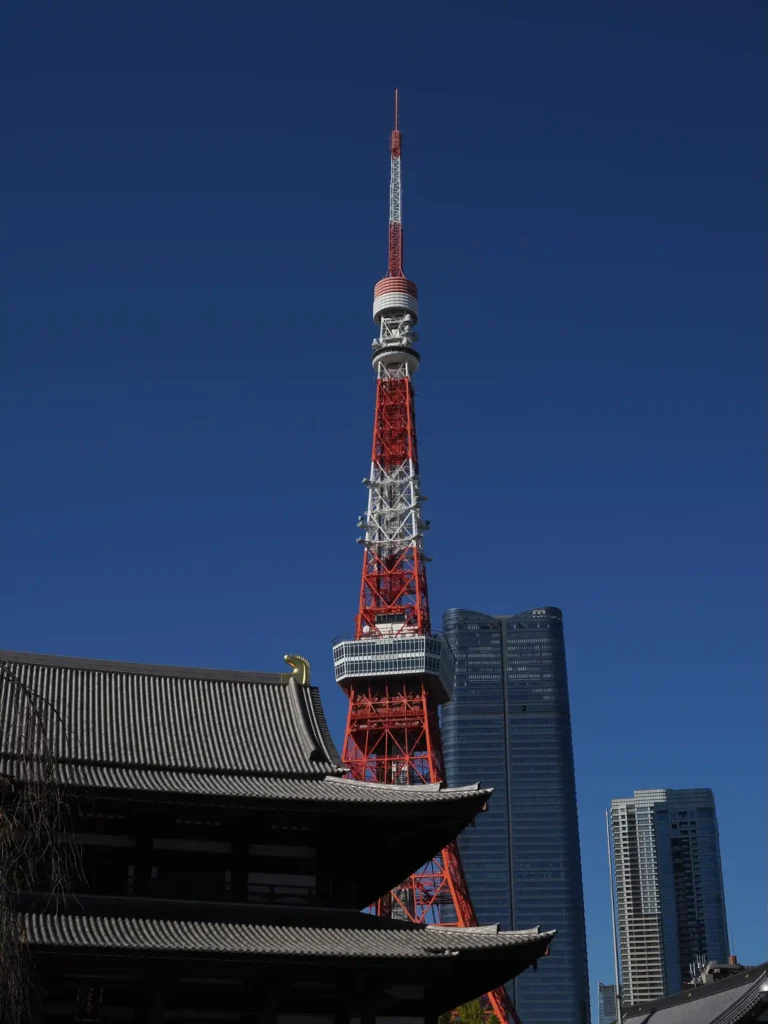
At the time, it surpassed its Parisian inspiration in height, symbolizing the ambition and rebirth of a nation looking toward the future with optimism.
For the traveler seeking to understand the city’s essence, Tokyo Tower is an essential stop. Unlike more modern, colder structures, this tower retains a nostalgic Showa-era charm that connects emotionally with Tokyo’s residents.
Visiting allows you to appreciate the scale of this massive city from its two observatories, offering a privileged view of Mount Fuji on clear days and an unparalleled perspective of the city’s night lights.
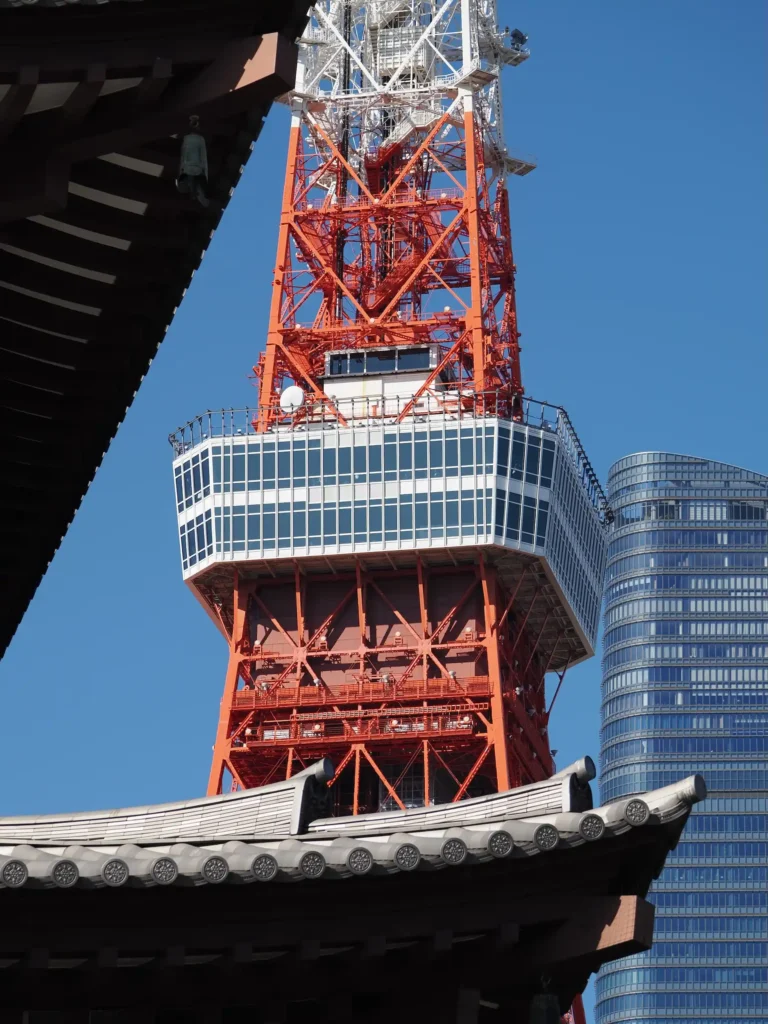
The area surrounding the tower, particularly the Minato neighborhood, offers a fascinating contrast between corporate modernity and spiritual calm.
- Zōjō-ji Temple (増上寺): Just steps away, this is the main temple of the Jōdo-shū branch of Buddhism and serves as the mausoleum for several Tokugawa shoguns. The image of the ancient temple with the modern tower in the background is one of the most beautiful examples of the coexistence between tradition and the avant-garde in Japan.
- Shiba Park (芝公園): Nearby, this park invites visitors for a peaceful stroll beneath the shade of the trees.
The local culture in this area manifests through refined gastronomy and festivals that mark the changing seasons. Throughout the year, the tower changes its illumination to celebrate events like Tanabata (七夕) or the Moon Festival, fully integrating into the rhythm of life for Tokyoites.
In the nearby Azabu-juban area, it is common to find small taverns and haute cuisine restaurants where you can taste everything from traditional soba to international dishes, reflecting the cosmopolitan character of this district.
Plan Your Journey If you are planning your next getaway to the Land of the Rising Sun and wish to experience the magic of Tokyo in an exclusive and personal way, we invite you to contact us. At Asiahop, we will design a custom itinerary that allows you to discover these icons and their best-kept secrets.