

Some cities you stroll through; others you traverse. Chongqing is the latter: a metropolis of over 30 million people squeezed between mountains and two great rivers, where skyscrapers grow on hilltops, monorails slice through apartment blocks, and the steam of hotpot hangs over every alley. For centuries it was the trading gateway of the Yangtze; today it is one of China’s most fascinating cities and, more often than not, the starting point of a Yangtze river cruise.
Three days is the minimum to grasp its triple identity: the spiritual, the historic, and the dizzyingly modern. Here is our complete itinerary so you miss nothing essential.
The itinerary at a glance:
| Day | Morning | Afternoon | Evening |
|---|---|---|---|
| 1 | Luohan Temple | Ciqikou | Hongya Cave + Jiefangbei |
| 2 | Wulong National Park (full day) | Hotpot | |
| 3 | Jiefangbei | Liziba + Yangtze cableway | Shibati or Longmenhao at sunset |
Day 1: Chongqing’s ancient soul. Luohan Temple, Ciqikou and Hongya Cave
Luohan Temple: meditation in the middle of the financial district
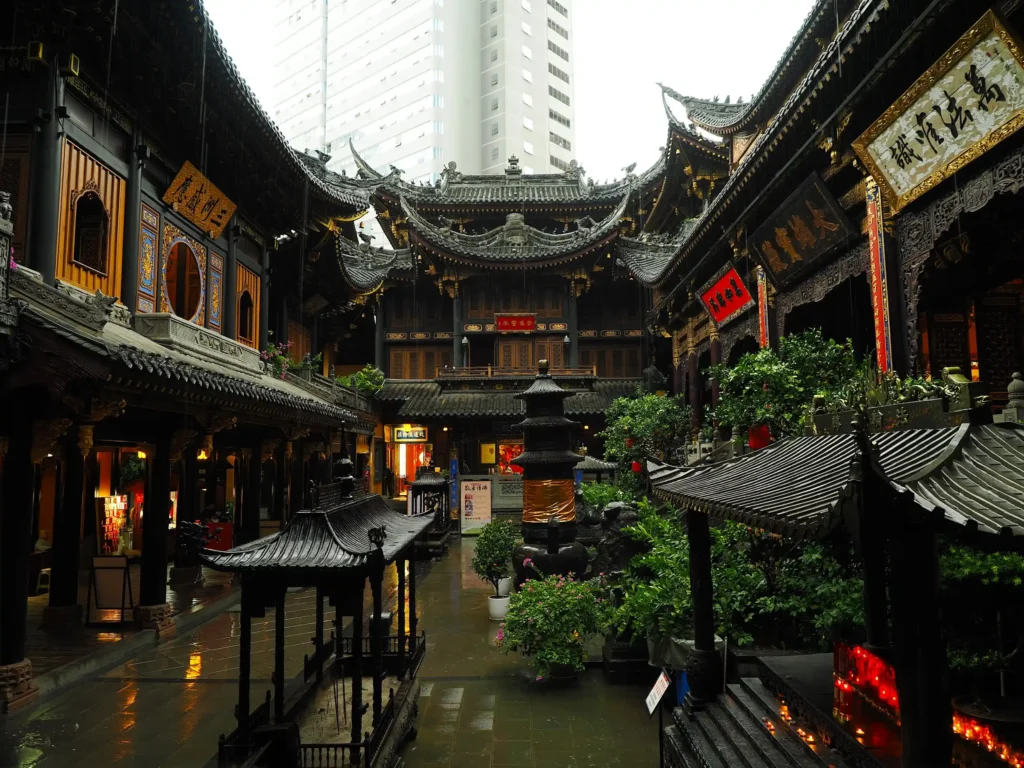
The best way to begin is with a contrast that captures Chongqing in a single frame: Luohan Temple, a Buddhist complex over a thousand years old, surrounded by the skyscrapers of the Jiefangbei financial district. The moment you step through the gate, the city noise falls away: only the smoke of incense coils, candles crackle, and worshippers murmur. Don’t miss the Hall of Five Hundred Arhats, with its seemingly endless rows of terracotta statues, each with a different expression. Give it a quiet hour (entry, including the incense ticket, is roughly 10–20 yuan, approximate).
Ciqikou: the ancient porcelain port
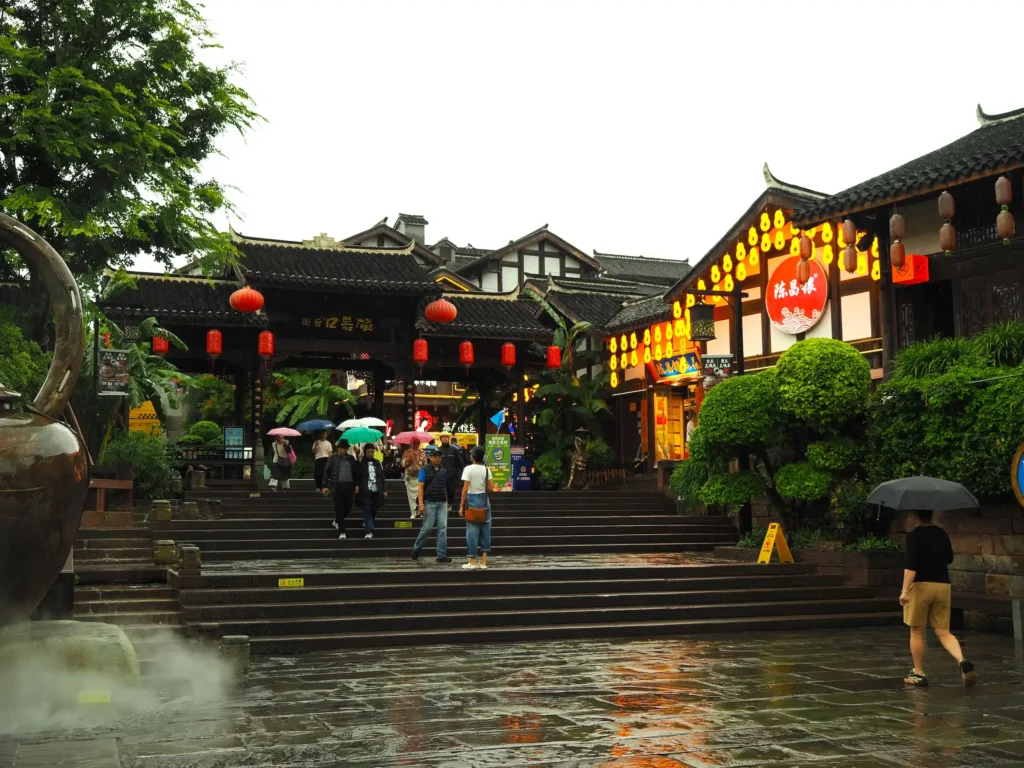
In the afternoon, travel back in time at the ancient town of Ciqikou, about 40 minutes away by metro. This stone village on the banks of the Jialing River was, during the Ming and Qing dynasties, one of the busiest commercial ports in the empire — specialized in porcelain, which gave it its name. Today its cobbled lanes still hold wooden houses with tiled roofs, pottery workshops, teahouses where the erhu is played, and stalls selling chou dofu (fermented tofu — for the brave). Free entry. The perfect plan: wander without a map, snack on street noodles, and finish in a teahouse overlooking the river.
Hongya Cave: Chongqing’s postcard by night
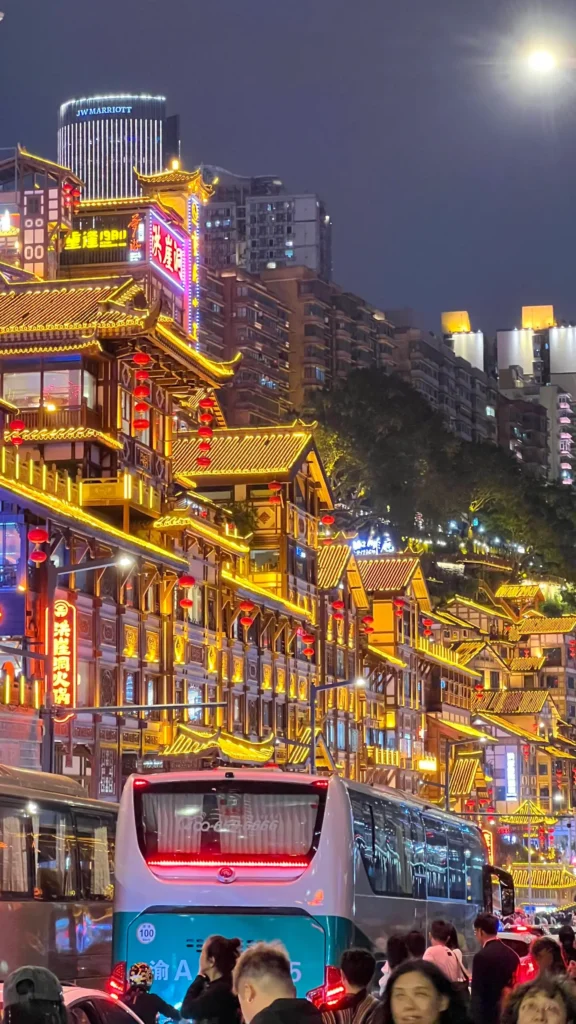
As evening falls, head back downtown for the city’s most photographed sight: Hongya Cave (Hongya Dong), a cluster of eleven diaojiaolou-style buildings (houses on stilts) cascading down the cliffside between Jiefangbei and the Jialing River. Lit up at night, it looks plucked from an animated film. It’s free to enter and mixes shops, restaurants and viewpoints; the best photos are taken from Qiansimen Bridge, right next to it. Dinner in the area: Jiefangbei overflows with noodle stalls and chuan’r (skewers).
If you’ve still got energy (and appetite), end the night with a walk to Chaotianmen, the point where the Jialing merges with the Yangtze. For centuries it was the commercial wharf that made the city great; today it’s a perfect lookout for understanding Chongqing’s geography: two rivers, two hills, and a city growing wherever it can.
Day 2: spectacular nature. Wulong National Park
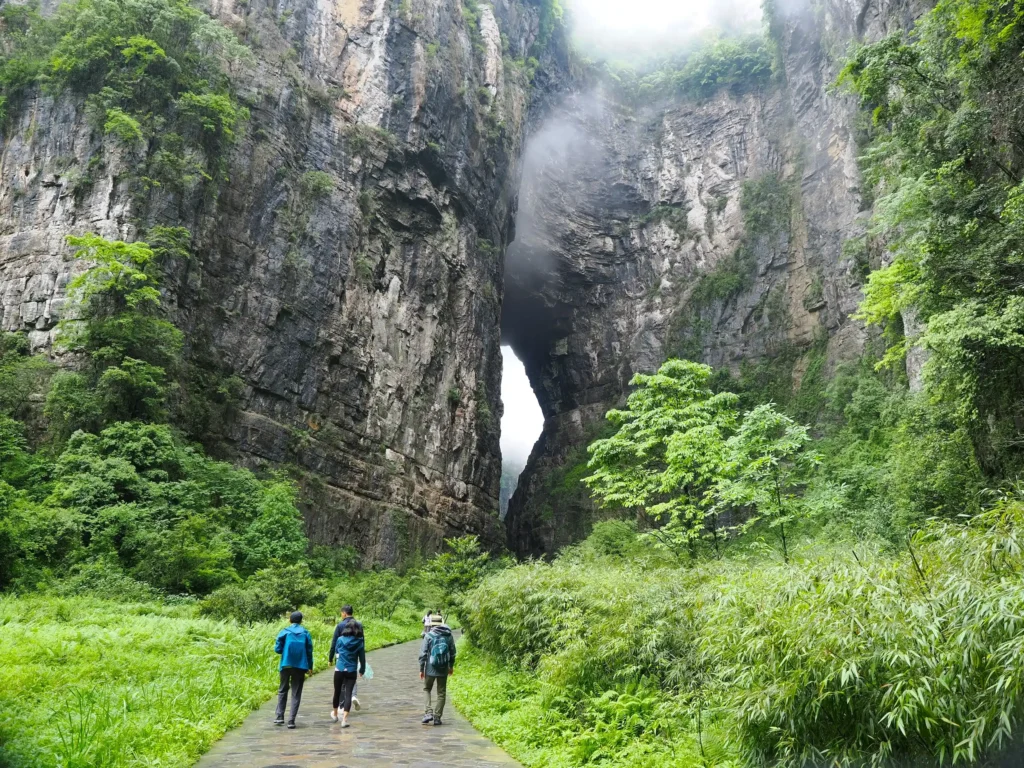
Reserve your second full day for Wulong National Park, about two hours from the city. It is the most spectacular geology in the region: a karst massif declared a UNESCO World Heritage Site, where water has carved gorges, caves and natural stone bridges over two hundred metres high.
The essentials:
- The Three Natural Bridges (Tianlong, Qinglong and Heilong): three limestone arches succeeding one another in a gorge draped in vegetation. The scale is humbling — and if fog drifts into the canyon, even better.
- Furong Cave (Furong Dong): one of the largest caves in the world, with an 80-metre underground waterfall you can view from a panoramic elevator.
The combined entry ticket with the internal shuttle bus usually runs around 135–155 yuan in high season (approximate). Getting there is easiest with an organized tour or a private car; independent travellers can take the train to Wulong town and a local taxi. You’ll return to Chongqing with your fill of scenery — the perfect moment to try an authentic hotpot and understand why this city is the birthplace of China’s most famous dish.
Day 3: the future is already here. Jiefangbei, Liziba and the Yangtze cableway

The third day is for vertiginous, everyday Chongqing:
- Jiefangbei: the commercial district around the Liberation Monument, the modern heart of the city. Perfect for a morning stroll and coffee with a view.
- Liziba Station: the spot where Line 2’s monorail literally passes through the middle of a residential building. Watching the train enter through the block’s window is one of the most surreal (and free) sights in China. There’s a pedestrian viewing area at street level.
- The Yangtze River Cableway: the Yangtze River Cableway links the districts of Yuzhong and Nan’an across the riverbed. Around 20–30 yuan per ride (approximate); try to avoid rush hour and consider booking a time slot.
- Shibati or Longmenhao: to finish, wander down the old Eighteen Steps neighborhood, newly restored, or along the terraces of Longmenhao, full of cafés overlooking the river. The plan: watch the sun set over the Yangtze.
Got an extra day? Then add the Dazu Rock Carvings, about two hours from the city: thousands of Buddhist, Taoist and Confucian sculptures chiselled into the rock between the 9th and 13th centuries, a UNESCO World Heritage Site and one of China’s least-known artistic treasures. Forget the crowds of the big monuments: here you’ll share the silence of the valley with local farmers.
Where to stay in Chongqing
The best base for a first trip is Jiefangbei: you’re within walking distance of Luohan Temple, Hongya Cave, the cableway and the most useful metro entrances. If views are your priority, across the river awaits Jiangbeizui, the modern financial district with glass-fronted hotels facing the Yuzhong skyline; and if you want calm after an intense day, Nan’an, south of the Yangtze, has terraces and a neighbourhood pace. Either way, ask for a high floor: morning fog may hide the city, but when it lifts, sunrise over the rivers is the best alarm clock in China.
When to visit Chongqing
Chongqing is known as one of China’s “furnace cities”: in summer the thermometer easily tops 35 °C and the humidity is stifling. The best times are spring (April–June) and autumn (September–November), mild and with clearer skies. Winter brings damp cold and fog, which lends the city a mysterious air but hides the views. If you travel in January or February, bear in mind Chinese New Year: shops close and the city either empties or fills up depending on the year.
Practical tips for getting around Chongqing
- Metro first: the network is extensive, modern and cheap (fares of 2–7 yuan, approximate). At rush hour taxis crawl, and because the city is so vertical, distances punish bad planning.
- Everything is vertical: what looks like 500 metres on a map can hide 200 steps. Comfortable shoes, always.
- Pay by phone: Alipay and WeChat Pay work almost everywhere; carry some cash just in case.
- Language: outside hotels and major sights, English is limited. Save addresses in Chinese or keep screenshots handy.
- Fog is not a problem, it’s the mood: if the skyline wakes up covered, the city still works; most days it clears by afternoon.
- Internet: Google, WhatsApp and Instagram don’t work without a VPN in China; set one up before you travel or get a travel eSIM that includes it.
FAQs: what to see in Chongqing
Is Chongqing worth visiting?
Yes — and more travellers are discovering it every year. It is one of the few cities in the world where you can see a thousand-year-old temple beside a skyscraper, eat the best hotpot of your life, and walk a canyon of natural bridges, all in the same weekend.
How many days do you need in Chongqing?
Three days covers the essentials: heritage and history on day one, nature at Wulong on day two, and the modern city on day three. With one or two extra days, add the Dazu Rock Carvings or a night cruise along the two rivers.
How do you get to Chongqing?
Chongqing has an international airport with flights from Asia’s major hubs and domestic connections across the country. From Chengdu, the high-speed train takes roughly an hour and a half.
Is Chongqing safe to visit?
It is one of the safest big cities in the world: violent crime against tourists is extremely rare, and you can walk around at night with peace of mind. The usual precautions (mind your phone and wallet in very crowded areas) are enough.
What do you eat in Chongqing?
Hotpot is the local religion, but also dan dan noodles, chuan’r skewers, chou dofu and steamed pork belly. Everything comes with plenty of chilli — though you can almost always ask for it “wei la” (mild).
Can you combine Chongqing with a Yangtze river cruise?
It’s one of the classic combinations in southwest China: many Yangtze cruises (towards the Three Gorges or Wuhan) start or end in Chongqing, so it’s easy to chain 3 days in the city with 3–4 days of sailing. If you’re considering it, tell us when designing your route: boarding schedules determine the order of the itinerary.
Do I need a visa to travel to Chongqing?
It depends on your nationality: Spanish citizens can enter China visa-free for up to 30 days under the exemption policy currently in force (extended for now until the end of 2026, subject to change). Always verify the rules before booking flights: if your profile doesn’t qualify, the standard tourist visa is the usual procedure.
Design your trip to China with us
Chongqing is only the beginning: combined with Chengdu, the Yangtze or the karst landscapes of the south, it becomes the start of an unforgettable journey. At Asiahop we design private, tailor-made trips around China with a Spanish-speaking guide and every detail taken care of. Tell us how you imagine your trip and we’ll help you design the itinerary and book the trip.