
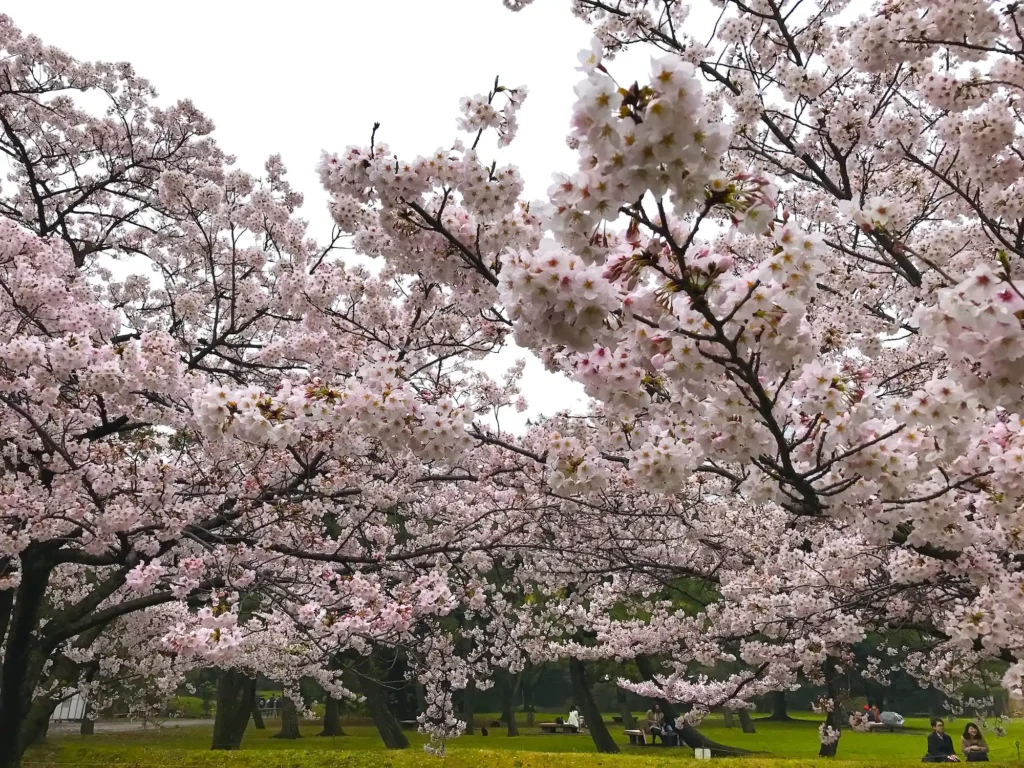
Sakura 2027: When and Where to See Cherry Blossoms in Japan
There is no image more Japanese than a cherry tree in bloom. For a few weeks each year, parks, castles, rivers and ordinary streets are covered in a cloud of pale pink that the Japanese celebrate with hanami: the art of sitting beneath the cherry tree and letting time pass. If you dream of living it in 2027, this is the moment to start planning: hotels in the key cities sell out months in advance, and those who book between November and January secure the best options.
This guide gathers everything you need: when cherry trees bloom by region, the best places to see them, and how to organise the trip without nasty surprises.
When do cherry trees bloom in Japan?
Cherry blossom (sakura) has no fixed date: it sweeps from south to north following the warmth, in what is known as the “blossom front” (sakura zensen). Every year, weather agencies publish refined forecasts from January onwards, but historical ranges let you plan with reasonable confidence:
| Region | Approx. first bloom | Full bloom |
|---|---|---|
| Kyushu (Kagoshima, Fukuoka) | late March | first week of April |
| Shikoku & Chugoku (Hiroshima, Matsuyama) | late March | first week of April |
| Kansai (Kyoto, Osaka, Nara, Himeji) | late March | first week of April |
| Kanto (Tokyo, Yokohama) | late March | first week of April |
| Tohoku (Sendai, Hirosaki) | mid-April | third week of April |
| Hokkaido (Sapporo) | late April | first week of May |
Exact dates shift by a week or two each year depending on the winter, so treat them as windows, not appointments. Full bloom (mankai) — the spectacular moment — arrives about 5–7 days after the first flowers, and the petals hold at their peak for between a week and ten days, longer if wind and rain are kind. One golden tip: if you can only hit one week, aim for the start of the window in the north and the end of it in the south.
The best places to see the sakura
Tokyo: the urban hanami par excellence
In the capital, sakura is a civic event. At Shinjuku Gyoen, hundreds of cherry trees of different varieties stretch the bloom longer than in any other park: arrive a little early or late and some tree will still be at its peak. The Meguro River delivers the classic image: petals falling on the water, boat rides and stalls selling sakura mochi along the promenade. And Ueno Park, with over a thousand cherry trees, is the most popular party: picnic blankets, bentos and karaoke under the blossoms.
Kyoto: millennia-old elegance under the petals
No city dresses up sakura like Kyoto. The Philosopher’s Path (Tetsugaku-no-michi), lined with cherry trees over the canal, is a walkable haiku; go early, because the crowds arrive with the sun. Heian-jingu shrine has a spectacular avenue of blossoms reflected in its ponds, and Daigo-ji, to the south, is famous for the historic procession of Toyotomi Hideyoshi among the cherry trees: if you want sakura with the most historical context, this is your place.
Nara and Himeji: deer and castles among blossoms
In Nara, the deer of the park live among the cherry trees, and the temple of Todai-ji with petals drifting down is one of Japan’s most endearing images. Less than an hour away, Himeji Castle — Japan’s most beautiful — rises white above a sea of cherry trees: the architecture + blossom combination is unbeatable for photographers.
Hirosaki: the best-kept secret
If the north fits your dates, Hirosaki (Aomori) is the unofficial sakura capital of Tohoku: more than 2,500 cherry trees around its castle, moats turned pink by fallen petals, and an atmosphere far more local than Kyoto. And because it blooms later (mid-April), it is the salvation of anyone travelling in the second half of the month.
Hiroshima and Miyajima: sakura beside history
In the west, Hiroshima’s Memorial Park — once a commercial district, today a vast green space — fills with cherry trees carrying a unique symbolic weight: life blooming where everything stopped. Half an hour by ferry, on the island of Miyajima, the great floating torii of Itsukushima Shrine shares the stage with centuries-old cherry trees. It is the country’s most beautiful contrast: nature, spirituality and memory in a single frame.
Mount Yoshino: sakura as landscape
In Nara prefecture, Mount Yoshino has for centuries been the place of cherry blossom pilgrimage: some 30,000 trees planted on mountainsides that light up in waves, from bottom to top. Tradition holds that the blossom has not failed once since the 8th century. Sleeping in a mountain ryokan and watching dawn break among pink clouds is one of the most memorable experiences of the trip.
The hanami ritual: much more than looking at flowers
Hanami was born in the 9th-century imperial court as a poetic excursion among cherry trees and has been Japan’s most beloved social ritual for centuries. Today it means gathering family, workmates or friends beneath the trees: arriving early to claim a spot (some send the intern at 7 a.m. with the blanket), eating, toasting with seasonal sake (hanami-zake) and celebrating the ephemeral itself. The Japanese sum it up like this: the cherry trees bloom and fall within ten days, like life itself. Joining a hanami picnic — even with a bento from the nearest konbini — is the fastest way to feel part of the country rather than a spectator.
How to plan a sakura trip without nasty surprises
- Book 4–6 months ahead: well-located hotels in Tokyo and Kyoto for full-bloom week sell out between November and January. Book with free cancellation and fine-tune dates when the official forecast lands (January–February).
- Avoid Golden Week: from 29 April to 6 May much of Japan goes on holiday; the country fills up and prices skyrocket. Mid-April northern blooms collide with its start — bear it in mind if you head to Tohoku.
- Flights first, hotels second: fares to Japan in sakura season rise late; lock them in as soon as you have approximate dates.
- Design your route following the wave: combine south + Kansai + Kanto if you travel late March–early April; add Tohoku if you travel later. A 15-day route gives you room to chase the bloom without rushing.
- Have a plan B for every day: each city has dozens of sakura spots; if one is green or bare, another 20 minutes away will be at its peak.
Hanami experiences you won’t forget
- Picnic under the cherry tree: buy a bento at a depachika (the gourmet food hall of a department store), spread a blanket in Shinjuku Gyoen or Maruyama (Kyoto) and join the ritual. Arrive before noon to claim a spot.
- Yozakura, the night-time sakura: many temples and parks light up the cherry trees after dark; blossom under warm light is a different experience. Hirosaki and Himeji castles are stunning at night.
- Sailing among petals: in Tokyo, a cruise on the Sumida River or a boat ride on the Imperial Palace moat; in Hirosaki, boats on the castle moat literally sail over a pink carpet.
- Hazakura, the beauty of the ending: if you arrive as the petals fall, you haven’t arrived late: paths covered in “pink snow” and the green buds of hazakura have their own poetry — and the crowds have already gone.
FAQs: cherry blossoms in Japan
How long does cherry blossom season last?
Roughly 10–14 days from first bloom to petal fall, with full bloom in the middle of that window. Wind and rain can shorten it: that’s why it pays to be in each area in its best week, not just “somewhere nearby”.
What if my dates don’t coincide with full bloom?
Nothing bad happens: Japan has cherry varieties that bloom from February (Kawazu-zakura) to May (in the north). And hazakura — trees already leafing green — and carpets of fallen petals are beautiful, with far fewer visitors.
Is travelling in sakura season much more expensive?
Flights and well-located hotels run 20–50% above low season, and the best ones sell out early. The difference between an expensive trip and an expensive, badly located trip is planning 4–6 months ahead.
Which cities should I combine on a 10–12 day sakura trip?
The classic combo: 3–4 nights in Tokyo, 3–4 in Kyoto (with Nara or Himeji as a day trip) and 1–2 in an in-between spot like Hakone, Kanazawa or Yoshino. If you travel in mid-April, swap the finale for Hirosaki or Sendai in Tohoku.
When should I book my sakura 2027 trip?
Ideally: lock flights and hotels between November 2026 and January 2027. Official blossom forecasts start appearing in January, so booking with flexible cancellation lets you fine-tune the route risk-free.
Book your sakura 2027 trip
Sakura rewards those who plan ahead and punishes those who improvise. At Asiahop we design private, tailor-made routes through Japan that chase the blossom according to your dates: you set the pace, we sort hotels, trains and bookings for the key moments. Tell us your ideal dates and we’ll send you a detailed, no-obligation proposal. The best seasonal hotels fly: the sooner, the better.